Seeds of a people-powered movement want to spread. But we must also understand the fertile conditions that allow movements to grow. Think of the following ten points as grounding principles that help neighbors successfully to resist political abuse and move toward our collective thriving:
1. Become Ungovernable through Mass-Cooperation & Mass-Noncompliance
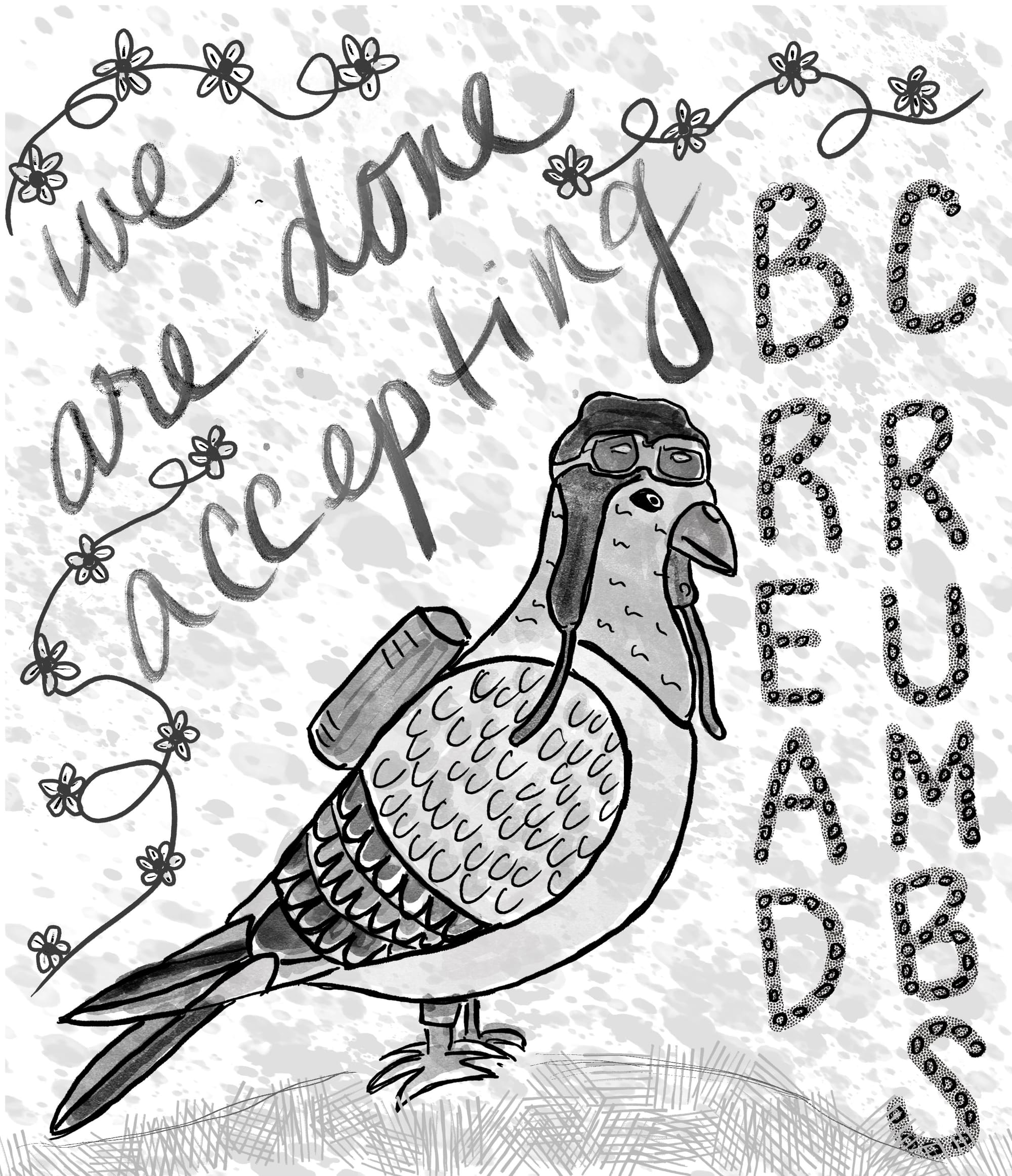
[Caption: Done with Breadcrumbs — by Nikolas Lee and GPat Patterson]
Gene Sharp, a prolific scholar on civilian-based defense, notes that the most successful nonviolent movements are built by ordinary people, refusing to “do what they’re told” and, instead, using what they have, where they’re at, to resist political abuse.
Our governments and institutions serve profit, no people, which is politically abusive [1]. Political abusers benefit from disorganized people scrambling for food, healthcare, shelter, and a host of other essential services, because this gives them the leverage to turn neighbor against neighbor and keep people begging for breadcrumbs.
Rather than give political abusers the chaotic and disoriented response that benefits their repression tactics, our aim is to organize ourselves outside and around rigged systems. Our first objective is to use mass-cooperation to return to each other what our political abusers have stolen from us. In so doing, we become much harder to coerce. Our second objective is to employ mass-noncooperation toward our political abusers. This makes us harder to scare and harder to abuse.
Political abusers are never defeated by working from inside a weaponized system, nor are abusers defeated by matching their energy. Rather, we uproot political abuse by refusing to play the the hand we’ve been given and starting to play another game.
Figures like Mahatma Gandhi[2] note that those suffering under political abuse must first “reclaim the village,” through developing cross-cultural kinship networks and engaging in small daily acts of service that allow the village— or, in this case, a neighborhood—to run itself without needing resources from those doing the oppressing. Ideally, if every person engaging with The Daisy Chain spent 2-3 a week in humble service to their neighborhoods, we could turn the political tide into a tsunami wipes abusers off the map.
This is the thing we must understand about Dr. Erica Chenoweth’s much-quoted 3.5% rule. It’s not that political abusers fall when 3.5% of the population shows up to mass-demonstrations [3]. Rather, we need to channel the 3.5% into hyper-local mass-cooperation and mass-noncooperation.
Instead of protesting these people on their terms, we’re giving each other what we need so they can’t control us or scare us.
2. Organize the Neighborhood, Not the Nation
[Caption: Start in Your Neighborhood — by Nikolas Lee]
People can get overwhelmed by the enormity of organizing across large land masses—be it entire cities, states, provinces, or nations. Fortunately, we don’t have to organize the nation, and it’s better if we don’t. Top-down organizing strategies almost always result in burnout, toxic individualism, and irreconcilable disagreements[4].
Rather than focusing on the mountain, we focus where where our agency lies and where political abuse shows up: in the neighborhoods right outside our doors. To make the idea of a neighborhood more concrete, our goal is to organize at the postal code +4 number[5]. If that metric[6] doesn’t make sense for you, consider your daisy-making neighborhood as the 10-30 minute walking/rolling radius around where you live. If you’re in a more rural area, swap to a 20-30 minute bike ride, scooter ride, horse ride, sled ride, buggy ride, or ride share[7].
Organizing at this level gives us a manageable unit of space to organize, which prevents us from snowballing, freezing, and sitting on our hands as things get worse. These discrete units of space empower us to meet our neighbors and create a decentralized movement that resists the kind of movement capture [8] that often happens in top-down organizing.
3. Focus on Our Neighbors, Not Our Abusers
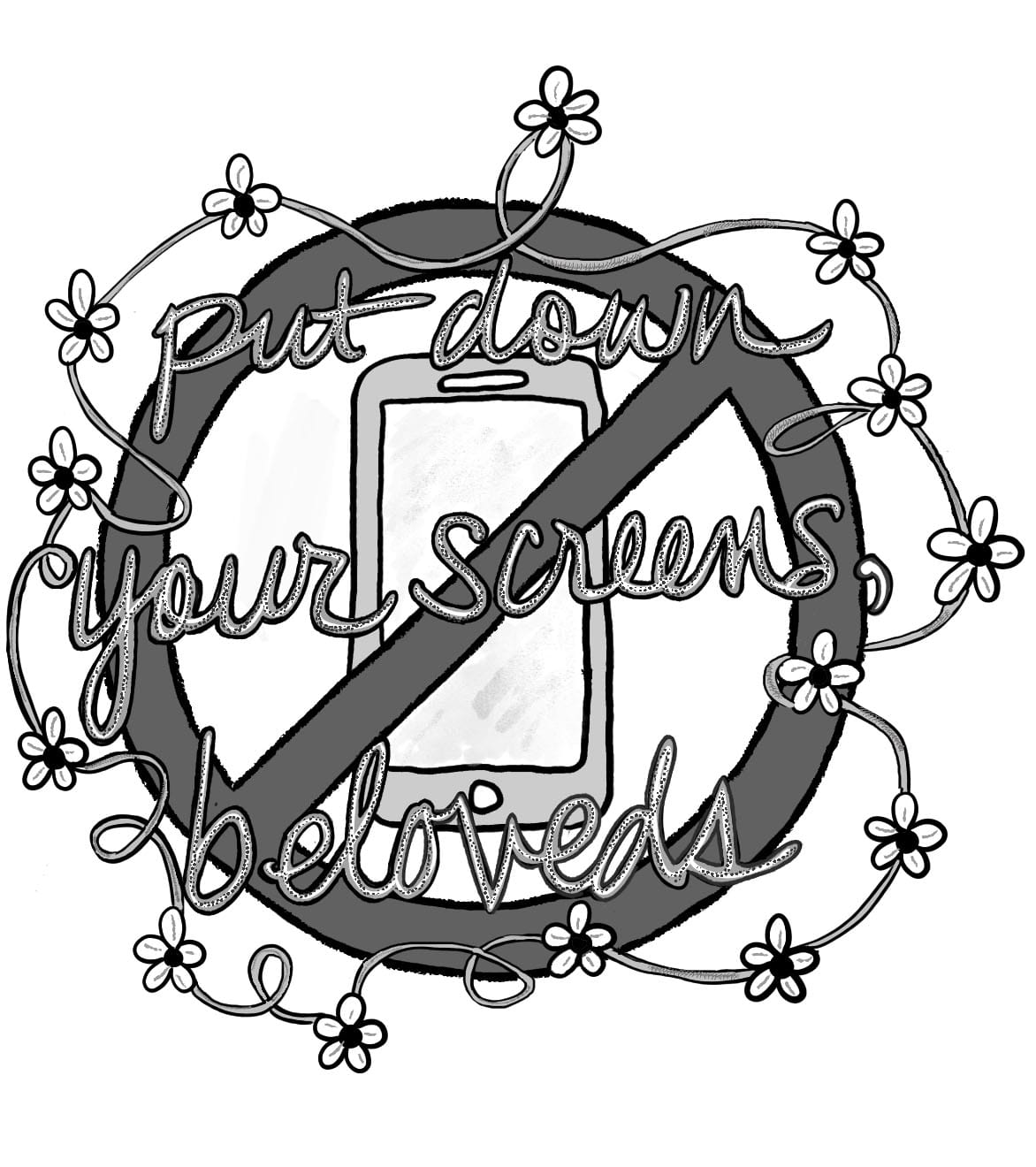
[Caption: Screens Down, Beloveds — by GPat Patterson & Nikolas Lee]
Because abusers do not hold legitimate power, they need to keep their targets disoriented and on the back-foot, feeling so anxious about what’s next that they’re too confused to mobilize a response. The chaos abusers create is more than keeping us in freeze: it’s about zapping us of our energy and our power. The more time, attention, and energy we give our political abusers, the more power they have over us— because we’re literally giving it to them.
Power is a current that flows wherever we put our time, attention, and energy. Our goal is to devote our time, attention, and energy to each other. That’s how we build people-power and overcome our political abusers.
Our ability to stop paying attention to political abusers’ chaos hinges upon our ability to make the offline more interesting, engaging, and attractive than online spaces. It’s not just that the revolution will not be televised, digitized, or absorbed into a large-language model. It’s that our abusers need us on those screens; that’s why they designed them to be so addictive.
When we walk away from our screens, they’re cooked.
Our job is to reclaim home turf: together, off-screens. This point is especially important, given what social scientists understand about where and why pro-democracy movements fail. A significant drawback of pro-democracy movements in the age of social media is that they spread too quickly online, budding into websites, hashtags, viral social media content, and symbolic protests— but then, ultimately, fizzle out. Why? In part, they took shortcuts.
There’s zero substitute for daily neighborhood organizing. In order for social movements to shift a culture, and in order for ordinary peopler to shift the ground under ossified institutions refusing to work for them, we must be vigilantly hyper-local.
Experimenting, playing, and cooperating in our neighborhoods is preciously how we leverage our home-court advantage.
It’s also exactly how we rug-pull our political abusers: Sesame Street style.
4. Reclaim Vulnerability as a Super-Power
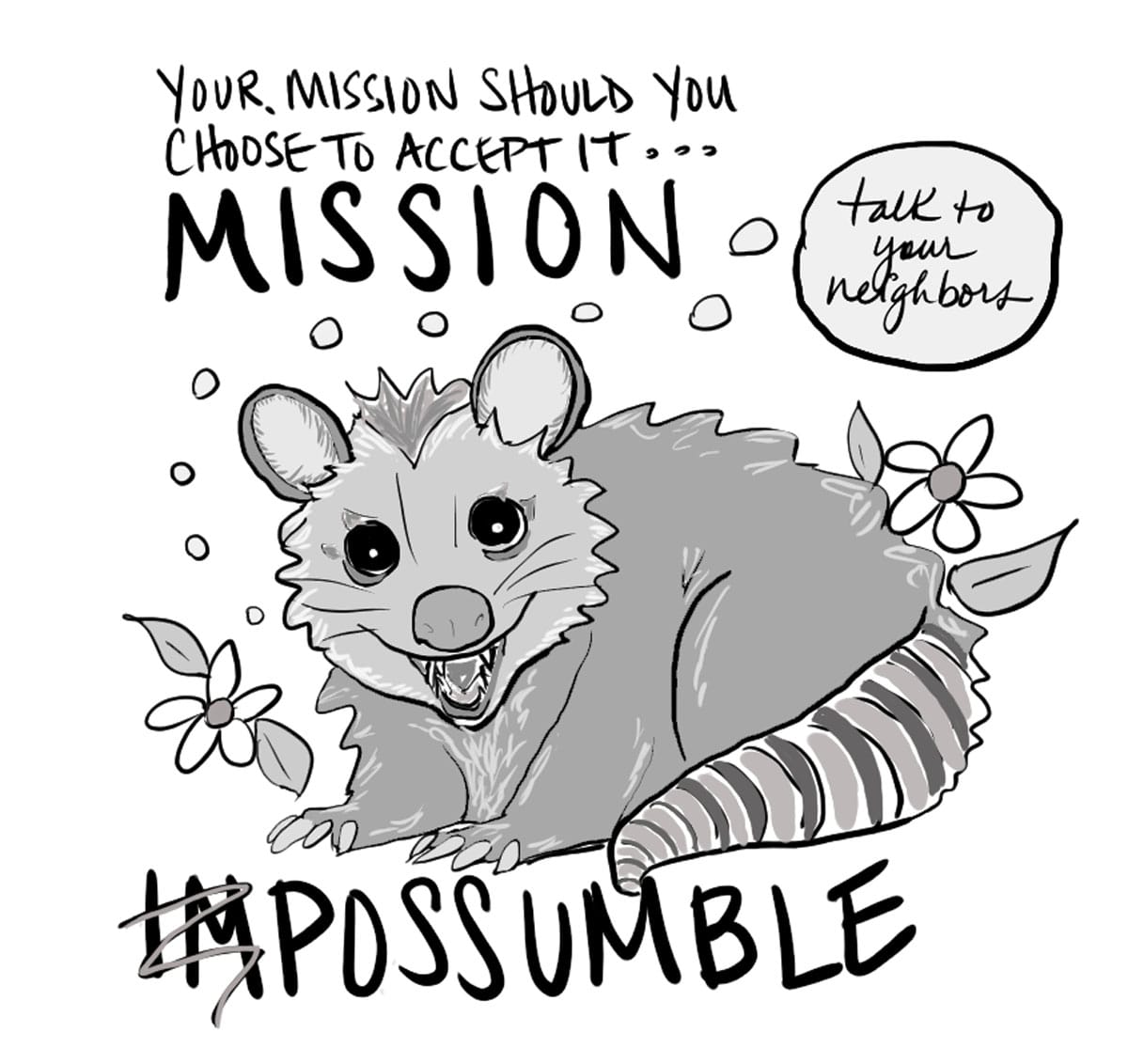
[Caption: Talking to Neighbors is Possum — by GPat Patterson & Nikolas Lee]
While The Daisy Chain relies on organizing within your postal code, the way to recruit those interested in creating change is different. Frequently, when people want to create change in their communities, they do what most humans do: they share information with their immediate friends and family. While it may be the case that some people’s immediate circles are enthusiastic and up for doing new things, it is often true that approaching people within your immediate circles (friends, family, church, etc.) will receive a tepid response, if not outright rejection.
While such limitations coming from people within your immediate circle may feel deflating, keep in mind that those who are most comfortable with the way things are will do what they can to discourage those in their immediate circles from “rocking the boat.” There’s also the uncomfortable truth that so many of our loved ones fear change and have been conditioned into learned helplessness as a result of decades of chronic political abuse.
While you could waste your time issuing rational responses to the people in your immediate circle who are apprehensive of, or even hostile toward social change, it’s important to understand that logic doesn’t move people: emotion does. People do not change unless they feel moved to change, and your neighbor needs to arrive at their willingness to act on their own. If you meet resistance in your immediate circle, please understand that this is normal (if painful)—and, crucially, that there’s still a way forward.
Rather than continuing to appeal to apprehensive people in your immediate circles and getting increasingly demoralized, the answer is to do something different. The solution is to relearn to how talk to neighbors you don’t yet know.
So many of us have been conditioned not to talk to our neighbors. We’re lucky to give each other a passing wave or remember the name of someone’s dog [9]. But we don’t know anything about each other. Structural abandonment, political abuse, and popular propaganda have made us more afraid of getting to know the people across the street than we are calling our congressperson, speaking at a city council meeting, showing up at a protest, or even getting teargassed by political abusers.
Why are people so apprehensive about talking to people they don’t know? People have socialized to see their vulnerability as a weakness. Vulnerability is our long-neglected superpower. In fact, we are encouraged at every turn to renounce it as a weakness: precisely because it is our strength.
Vulnerability gives us the courage to wear our hearts on our sleeves, to risk socially investing in one another, to transmute rejection into evolution, and to brave the fleeting embarrassments of mistakes and misunderstandings.
As grown adults, we cannot let our fears of rejection and fears of “imperfection” become barriers to a, deeply necessary, and life-saving social movement.
We must to evolve. Together.
There are people in your neighborhood[10] who feel the same way you do and who are ready to act. There are people in your neighborhood who are already doing the things you want to do. You just don’t know them yet. Find them, share the Daisy Chain with them, and fan out from there.
Neighbors already using The Daisy Chain field guide take these ideas to scale up neighborhood organizing into already-existing permaculture groups, neighborhood community councils, independent bookstores, farmers markets, local businesses, already-active mutual aid groups, and coalitions of churches who are already courageously active in their communities. One of the things you’ll notice about these examples is that these neighbors aren’t recruiting within their intimate circles—-they’re branching out and seeing what takes root.
The first step is being vulnerable and courageous enough to meet new people to get started. The Daisy Chain isn’t a new group you’re expected to start; it describes an already-existing phenomenon. Look for daisies already growing in your community. Look for people with similar civic values who may be working alongside churches, food pantries, domestic violence prevention networks, public libraries, unions, lgbtq groups, and indie bookstores.
Find someone already doing something in your neighborhood and join them. Invite a friend to join you. Accept an invitation, if you’re invited. Show up.
Some people aren’t yet awake. For now, let them be. Your job is to create the neighborhood atmosphere that arises them from their slumber. What happens in the smallest of relationships echoes out into the world. We can shape that echo by breaking out of our ruts and doing something different.
5. Protect Scapegoats, Not Cower to Bullies
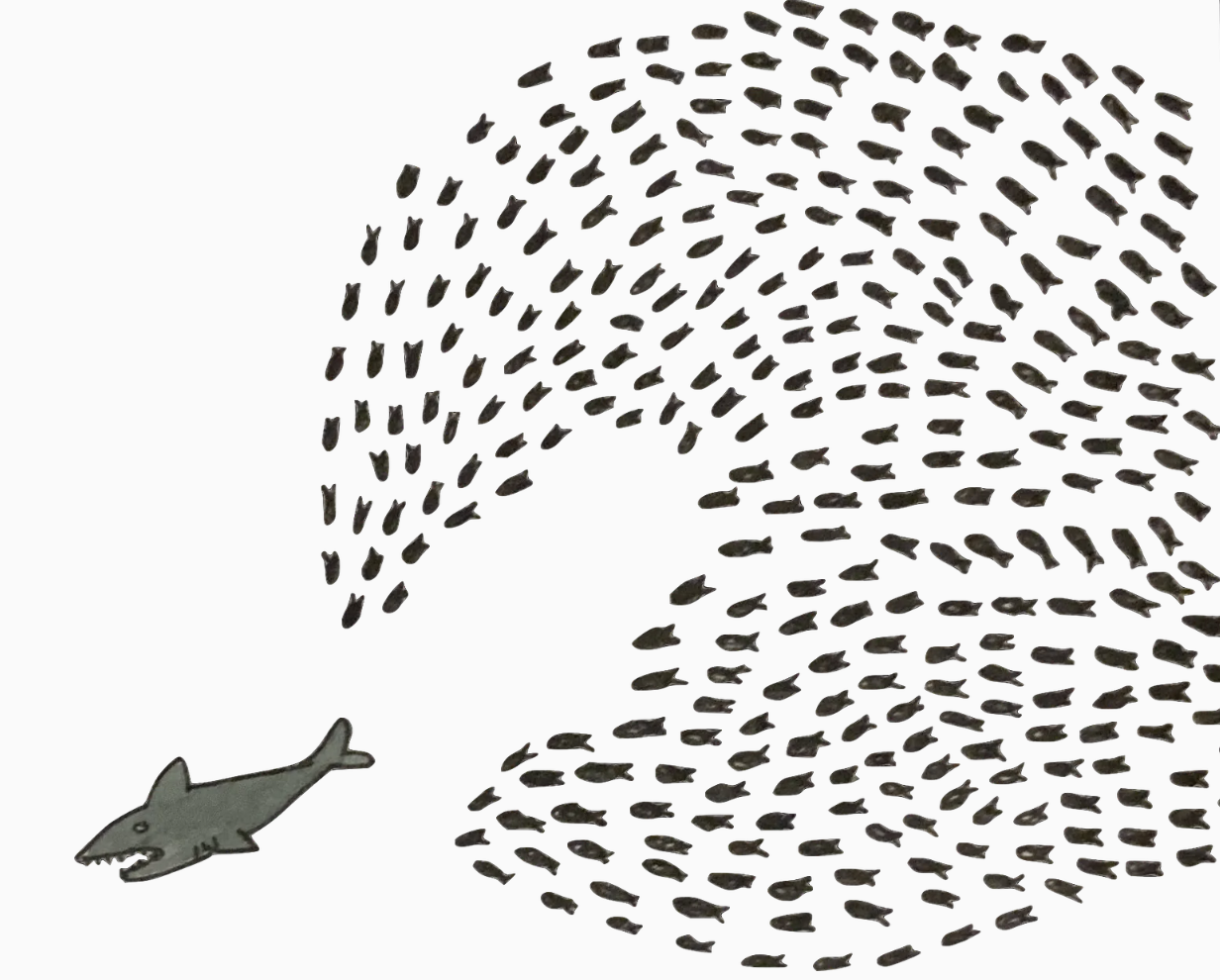
[Caption: When We’re Under Attack: Stand up, Fight Back — by Nikolas Lee]
Rather than engage in the politically abusive game of every person for themselves, we must practice meaningful solidarity with our vulnerable neighbors and our neighbors who have become targets of political abuse [^11].
For that reason, it is essential that we resist the common impulse to center organizing around the (dis)comfort[11] of those who are the least impacted by social harms. A performative social movement does nothing but waste precious time we do not have to spare. Those who feel uncomfortable standing up for their targeted neighbors must their peers who are willing to take risks to do this important work.
Whether it’s a workplace, a school, a church, a nation, or domestic abuse situation: we must actively and courageously choose the side of our targeted neighbors. Me must choose our neighbors above conditional alliances, fears of reprisal, and the impulse to “go along to get along,” which is rooted in coercive control.
That’s how bullies win.
The only real way to overpower political predators is to school together.
6. Recognize Nonviolence as Strength
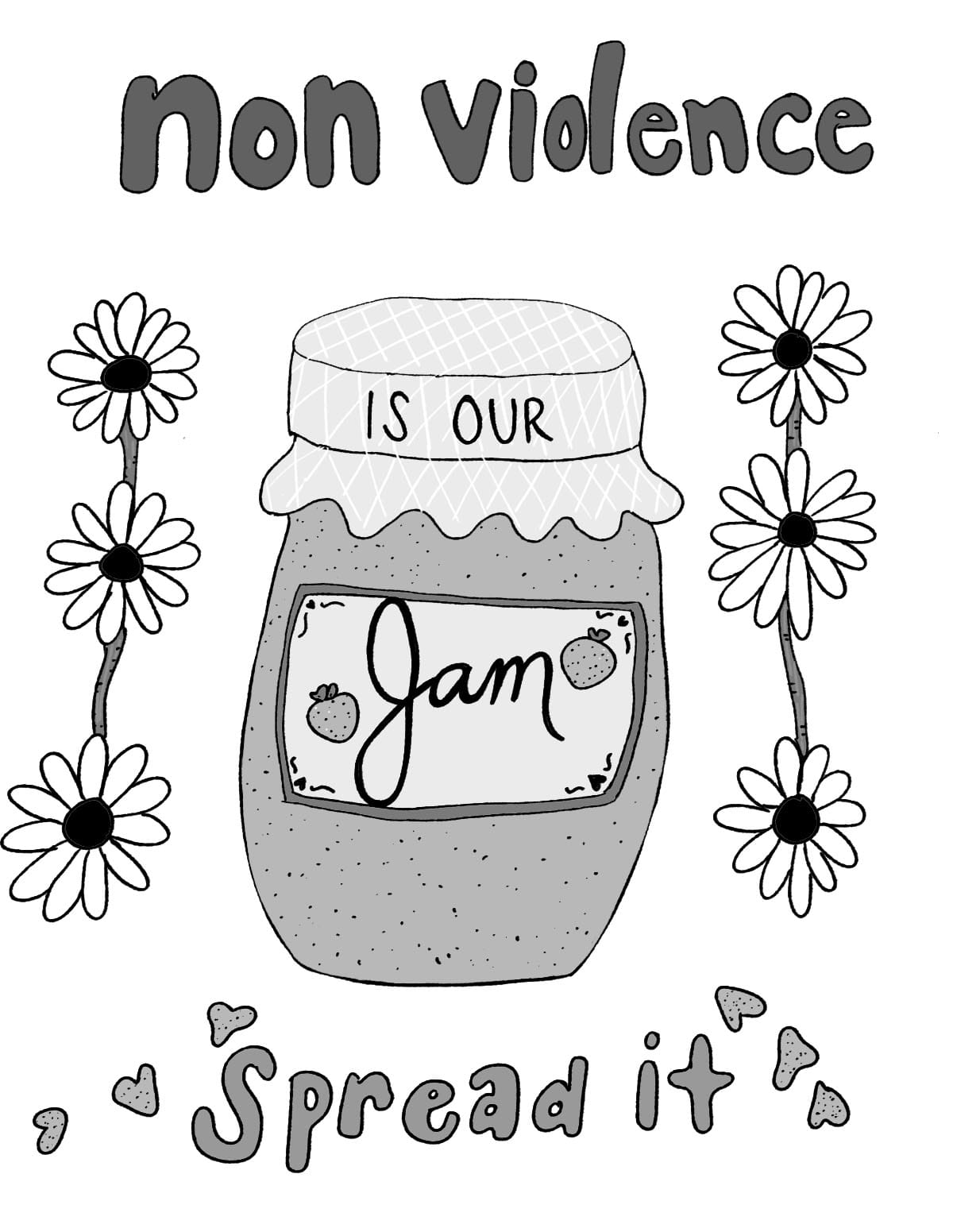
[Caption: Spread Nonviolence — by Nikolas Lee]
Because political abusers attempt to blur the lines around these concepts, let’s begin with two definitions: nonviolence and violence.
Nonviolence is not the same as passivity; this is a point civilian-based defense scholar Gene Sharp[12] makes rather emphatically. Nonviolence takes discipline, organization, and the adoption of methods that refuse to play into the hands of political abusers. Nonviolence requires relentless mass-cooperation with one’s neighbors and steadfast mass-noncompliance with one’s abusers. This is why one most often hears the phrase nonviolent action— because inaction, itself, is a form of violence.
Violence goads scared, desperate people into playing a losing game. Violence involves engaging in actions that result in the physical and psychological destruction of humans, animals, and other living beings. Violence works against our collective thriving. Practitioners of violence hope you’ll confuse their volume of lies, threatening doublespeak, and coercive control with power. Violence, in contrast, is only ever a sign of weakness.
The Daisy Chain is grounded in strategic nonviolence, not simply for moral reasons but for practical ones. Resorting to violence, which is the centerpiece of our masters’ tools [^14], decreases a social movement’s power[13]. First, it offers political abusers the pretext they need to use weapons of war against their own people. Second, the moment an exhausted people match the violence energy of their political abusers, those who would have otherwise joined a social movement scatter.
Falling into the trap of abusers by responding to violence with reactionary violence delays the success of pro-social movements by a decade[14]. We do not have a decade to waste.
Our power stems from inviting bystanders to become upstanders.
The more people who concretely take part in a pro-social movement, the more likely that movement is to succeed. Remember that actual power is a current that flows wherever we collectively direct our time, attention, and energy.
We do not need weak men’s tools. What we have is far more powerful, which is why they are goading you to play on their turf.
For that reason, The Daisy Chain takes great care to emphasize deescalating tension, alchemizing emotion, practicing mutual aid, engaging in creative expression, developing concrete transition plans, and a taking part in a range of other methods to prevent violence from erupting and to thwart bad actors who often infiltrate social movements[15].
7. Let Power Flow, Instead of Hoarding It
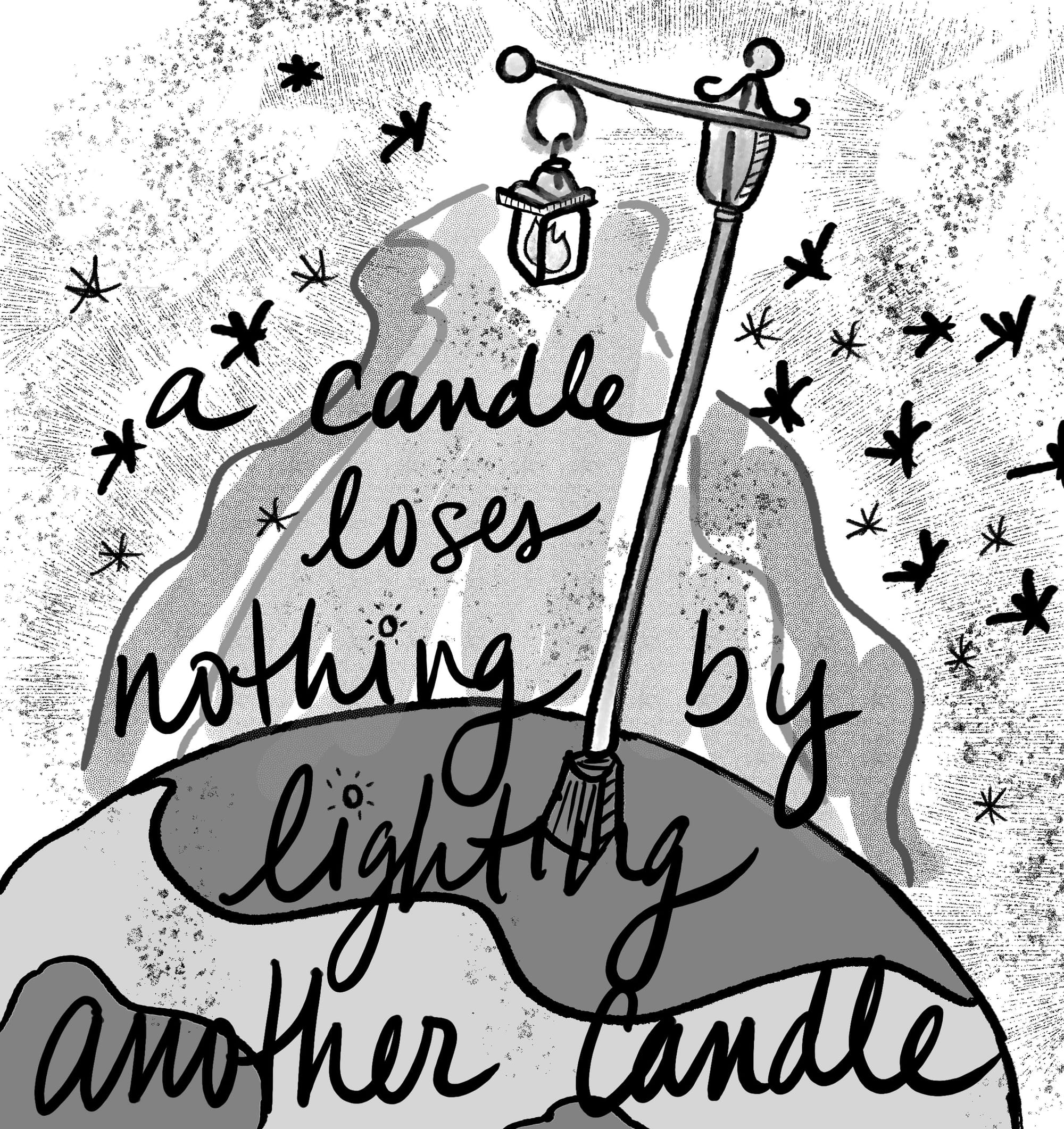
[Caption: Become Lamplighters — by GPat Patterson [quote by Fr. James Keller]
When choosing how to get involved, it’s essential that we move where our energy[16] takes us. Keep in mind that there is a place for every single neighbor, regardless of their time, talents, treasures, resources, and capacities for risk. Our job is not to gate-keep but to light each others’ lamps.
To ensure that the ecosystem thrives, no neighbor should take risks they do not want to take. At the same time, no neighbor should stifle the nonviolent organizing of those who are willing to take strategic risks to aid their neighbors.
Micromanaging kills movements.
8. Reframe Conflict as an Invitation to Co-Evolve
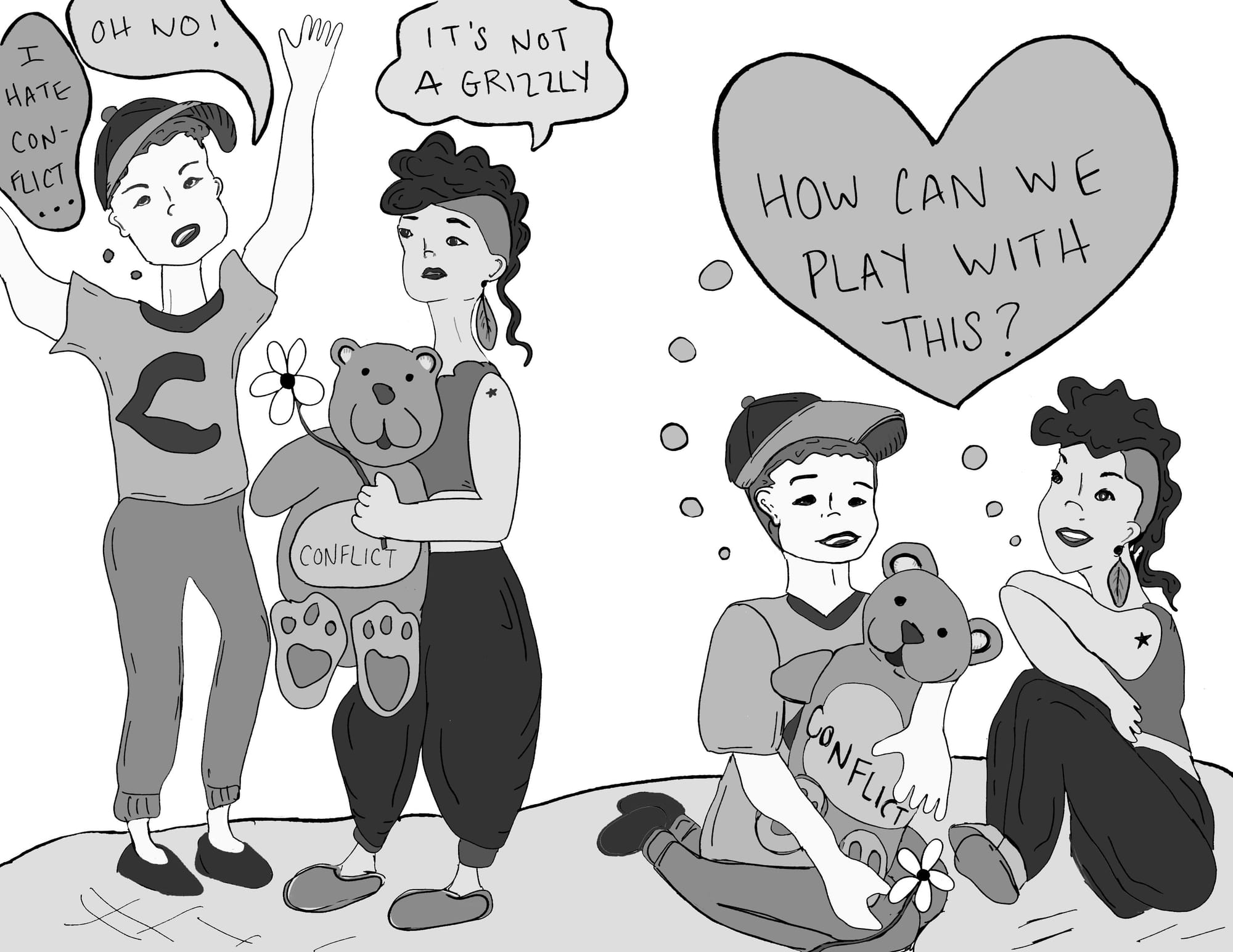
[Caption: Play with Conflict — by GPat Patterson & Nikolas Lee]
Learning to collaborate will require a drastic reframing of how we have been socialized to approach conflict. In politically abusive cultures, conflict is met with contempt, stonewalling, gaslighting, ostracism, punishment, and violence. The reason political abusers treat conflict as an attack is because conflict has always been an invitation to evolve. Abusers want rigged power dynamics to remain unchanged so that the game works in their favor and to our detriment.
Conflict is a pro-social phenomenon that naturally arises when people are at odds about how to meet shared goals or address a problem. When good-faith conflict gets dismissed as a threat, we lose our ability to evolve. Instead, we calcify and become less and less able to meet the moment.
In healthy adaptive relationships, true conflict is recognized as a gift that leads to a collaborative renaissance and collective well-being. Approaching conflict as an invitation to evolve requires two critical shifts in perspective:
Shift 1: Move from Defensiveness to Curiosity
The first shift is internal; it involves approaching conflict from a place of curiosity rather than defensiveness. Disagreement is not a grizzly bear; it does not require you to be at war with your neighbor. Recognize that any person willing to disagree in good faith is going out on a limb to trust you with their concerns—and they’re likely raising the point because they want your collective efforts to succeed. Instead of getting defensive around disagreement, shift to a place of appreciation for your neighbor’s willingness to be vulnerable with you and, from there, move into a place of curiosity about the contours of their different perspective.
Shift 2: Move from Dialogue to Play
The second shift is relational; it involves shifting from dialoging about the conflict into playing with conflict. While dialogue, on its face, can potentially be a good thing, it also keeps us in our heads and may result in us resorting to scenarios where the alleged “best argument” or persons with the most institutional status win. In contrast, when we practice playing together in order to move through stuck places, we are better able to re-inhabit our bodies, co-regulate nervous systems with our neighbors, and reclaim conflict as a source of innovation.
From a neurobiological perspective, play is the source of our evolutionary genius. Play is how all mammals (including humans) learn about the world around them, innovate together, and swerve away from the destructive impulse to annihilate. Play helps us shift from heady arguments to embodied innovation. In the fact of conflict, we must return to the question: how can we play with this? Because, here’s the truth: we always have options and we always have agency
9. Grow Local Movements, Not Monocultures
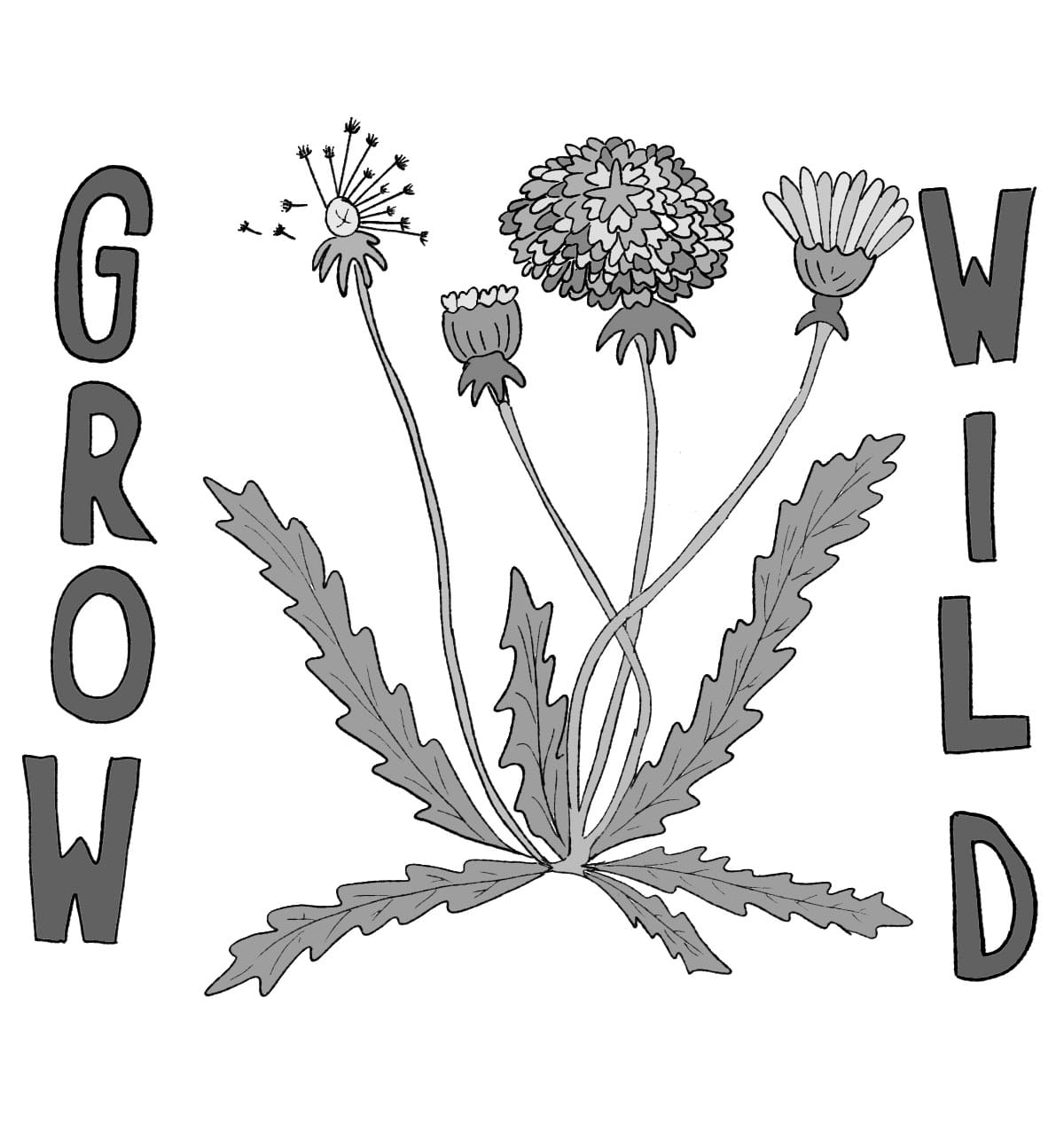
[Caption: Become Wildflowers — by Nikolas Lee]
This movement spreads across the country through emergent strategy, a term adrienne maree brown[17] popularized to illustrate that successful movements rely on hyper-local, organic connections—not top-down or astroturfed affairs.
The Daisy Chain must spread via networked clusters of neighbors, who start a thing and watch it grow, through intentional recruitment and relentless celebrations of the entire community. For The Daisy Chain to actually take roots and spread, our movement cannot be terraformed.
We must take care to plant flowers of mass-cooperation that are indigenous to the soil under our feet. In that way, we build social movements that endure because they are tailored to the needs, strengths, resources, vulnerabilities, and brilliance of our own neighborhoods.
10. Create Relentlessly Beautiful Patterns
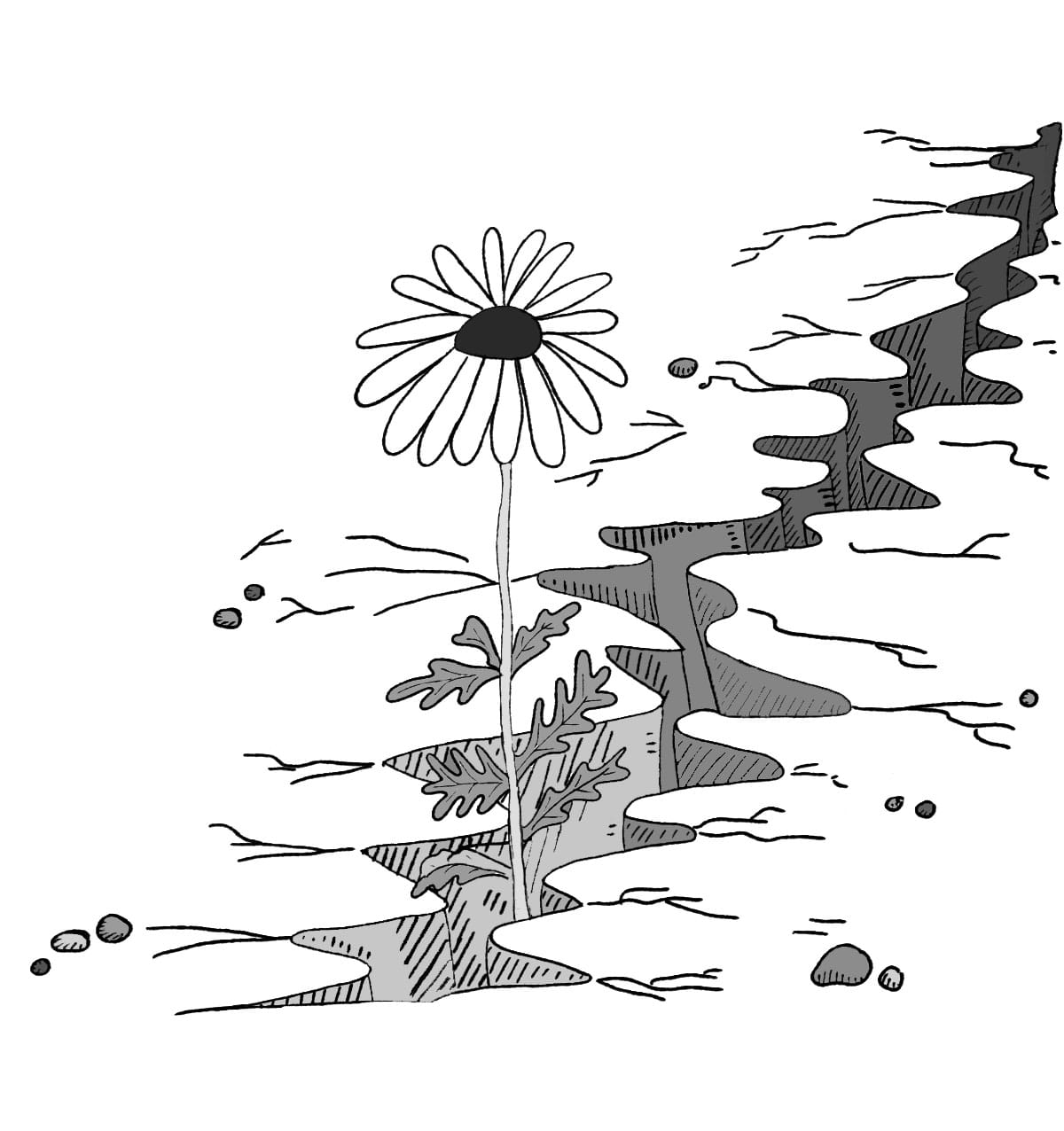
[Caption: Through the Cracks — by Nikolas Lee]
When we solve problems and achieve goals together—with as much creativity and texture as possible, so that as many neighbors can participate as possible—we create do more than avoid burnout: We create sustainable people-powered movements.
Actual power doesn’t move objects: it moves hearts and minds.
Power [18] is a current that flows wherever we devote our time, attention, and energy.
When we move together and pay attention to each other, our political abusers lose power and their leverage over us. There is safety, and beauty, in our numbers.
When we are relentless in creating a more beautiful pattern, one that brings as many of us together as possible and grounds our movement in joy, we not only demonstrate [19] that another way of living is possible but we also harden off our communities to political abuse.
When people aren’t scared, confused, and desperate, they don’t turn on each other.
Only weak people need weapons, war-chests, and wretched behavior. Neighbors are powerful. We uproot political abuse by relentlessly growing a more beautiful pattern— one that smothers our abusers’ illusion of power and composts their cruelty into creating the world we want to see.
When we change the pattern in our neighborhoods,
we also change the pattern in our world.
Chapter 4 Footnotes
[^11] Centering the needs of vulnerable neighbors and building organizing around that is, quite simply, about usability testing. If the goal of The Daisy Chain is to upend political abuse by reweaving the fabric of community, it is important to make sure our most vulnerable neighbors don’t fall through the cracks. When we build systems to benefit the needs of the most vulnerable, it ultimately benefits everyone else, too, because we are all, in different ways, subject to becoming vulnerable ourselves. The Daisy Chain is indebted to the insights of Leah Lakshmi Piepzna-Samarasinha’s book Care Work: Dreaming Disability Justice (2018) and Patty Berne’s “10 Principles of Disability Justice.”
Healthy functioning governments serve people and the planet, not profit. ↩︎
Gandhi discusses this in his pamphlet Constructive Programme: Its Meaning and Place. ↩︎
Surrounding the Capitol is a foolhardy plan, because political abusers have already planned for exactly that scenario. ↩︎
While conflict in and of itself is actually healthy for movements, micromanagement is not. ↩︎
Consider a person who lives in Akron, Ohio. More specifically, that person might live in West Akron, and their postal code may be 44320. But there is a more granular way to organize West Akron: that smaller unit of space is the USPS +4 number. For example, the +4 number for some people living in West Akron is 1334, which means their postal code (at its smallest unit) is actually 44320-1334. The +4 number is how mail carriers efficiently deliver packages across such a large land mass. The point here, for our purposes, organize the smallest unit of space (your postal code + 4 number) and move outward from there. The idea here isn’t to become insular but, rather, to have an impressively nuanced understanding of your neighborhoods time, talents, resources, nooks, crannies, vulnerabilities, and unique topographical assets. No matter how much political abusers may attempt to scare people with mass surveillance, the truth is that they cannot know the human and ecological richness and strengths of an area like the people living there do. We must use that strength to our advantage to develop a nimble daisy-chain structure so that we can eventually move in murmuration with one another as a nation. If you are in the United States and you want to learn your postal code +4 number, you can find it here. ↩︎
If you’re not in the States, you probably have different, and far more logical, postal codes. Canada, our sovereign neighbor to the North, has postal codes that include both letters and numbers, which removes the need for a +4 postal code number. ↩︎
Climate collapse, unhinged forever wars, and a surveillance state that relies on license plate readers make traveling by car an increasingly unviable option. We are eventually going to need to ditch our cars for public transit based on renewable energy, and we’re also doing to need to travel by plane, cruise ship, or any other gas-guzzling form of transportation. It’s a dead-end fuel that kills people and the planet. The best use for our cars, in the face of political abuse is to park them in the streets to block the staging area abusers’ need to terrorize our communities and turn them into war zones. Truckers and bus drivers, I’m especially looking at you. ↩︎
The term “movement capture” was coined by scholar Megan Ming Francis, in her article “The Price of Civil Rights: Black Lives, White Funding, and Movement Capture,” published in Law & Society (2019). The article is, unfortunately, behind an academic paywall, but the gist is that when grassroots organizers seek out funding from wealthy donors, those donors often steer movements away from their original aims—often disempowering movements and watering them down into something more palatable for oligarchs, who are uncomfortable with actual people-power. Ming also has a co-authored piece with Erica Kohl-Arenas, published in The Forge (2021) called “Here We Go Again: Philanthropy & Movement Capture.” ↩︎
Learning your neighbor’s dog’s name is actually a good thing. Dogs can teach us to become more social. We co-evolved together, and they haven’t forgotten how to socialize. It’s us, with our faces behind screens who are in trouble. The goal here is to keep going. Keep learning more about your neighbors and make real connections. ↩︎
In fact, this project emerged, over ten years ago, from creating a Facebook event inviting concerned neighbors to meet up at a local library. Fifty people in post-industrial red-state town in Muncie, Indiana, showed up and kept showing up. Rather than appeal to state legislators who had already committed to abandoning their own constituents, neighbors drew from their own time, talents, interests, and resources to create social change using what they had, where they were at. At the center of that neighborhood engagement was a flourishing of new friendships and cross-pollinations in the community. Whereas other resistance groups, whose aim was to appeal to political abusers, have fizzled out, the neighborhood group that gave life to The Daisy Chain is still going strong to this day. ↩︎
Discomfort is hard. Fascism is harder. Choose your hard. ↩︎
This is a reference to Audre Lorde’s essay, “The Master’s Tools Will Never Dismantle the Master’s House, published in Audre Lorde’s book, Sister Outsider (2007). ↩︎
This is why political abusers often goad their targets into chaotic street protests. It turns scares bystanders away from movement building. ↩︎
Peter Ackerman points out in his book Checklist to End Tyranny (2021), along with a host of other reasons, why engaging in violence against tyrants doesn’t work (29-30). His work is free to read and download from the International Center for Nonviolent Conflict. ↩︎
The history of COINTELPRO shows us that political abusers in the United States infiltrate movements to smear their leaders, foment conflict, leak information, and advocate violence. ↩︎
This is a lesson from Marshal Rosenberg’s famous book Nonviolent Communication: A Language of Life. ↩︎
In her book, Emergent Strategy: Shaping Change, Changing Worlds (2017), brown defines emergent strategy as a way to build “complex patterns and systems of change through relatively small interactions” (2). ↩︎
Everything else people refer to as power settler-colonial trickery— which replaces the living power with hoarded objects. ↩︎
We demonstrate that there’s a viable alternative by practicing it. ↩︎

Member discussion: